Physics · Cosmology · Machine learning
Yashar Hezaveh
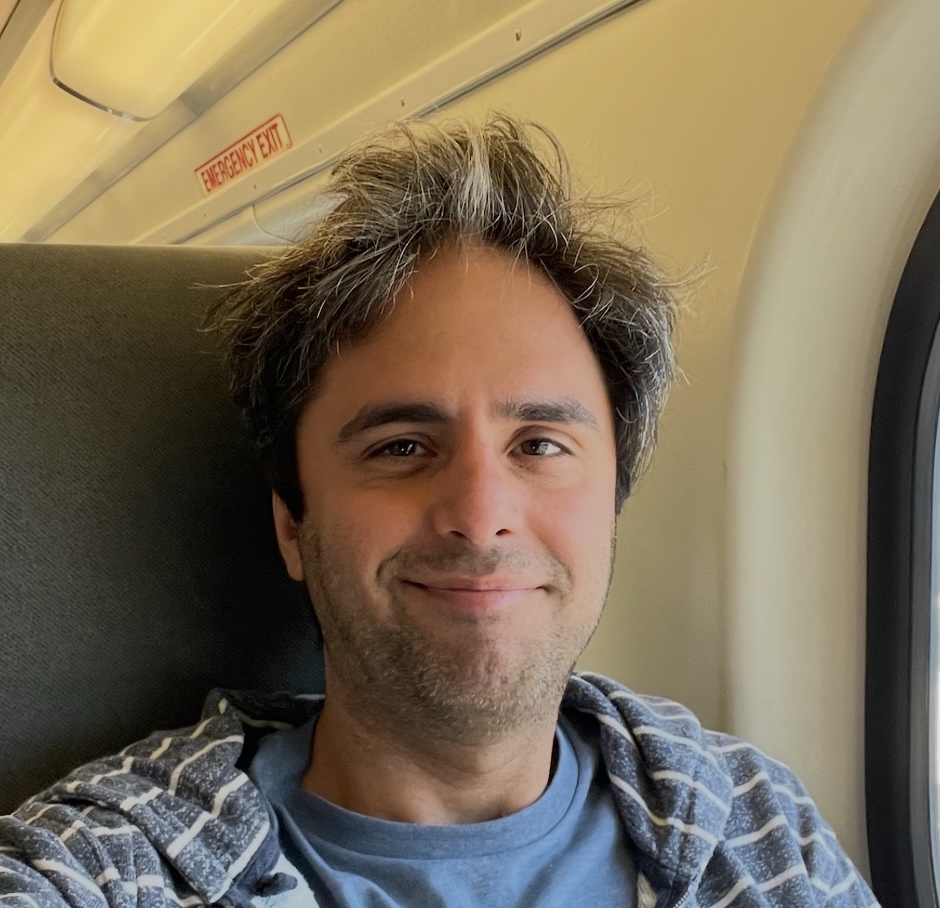
Associate Professor, Department of Physics
Université de Montréal
Director, Ciela Institute · Canada Research Chair in Astrophysical Data Analysis & Machine Learning
Introduction
I study how mass bends light in the cosmos—strong gravitational lensing—and how we can use those distortions to map dark matter and understand galaxy formation. My group develops machine-learning methods to extract faint signals from large surveys and high-resolution observations.
We work at the interface of theory, observation, and computation, with data from facilities including ALMA, Hubble and JWST, and next-generation surveys such as LSST/Rubin.
Recent highlights
- Congratulations to Justine Zeghal and the team for MIRA—a spotlight paper at ICML!
- Congratulations to Andreas Filipp for submitting his PhD thesis!
- Congratulations to Ronan Legin for submitting his PhD thesis!
- Congratulations to Missa Barco and Dhvani Doshi for obtaining NSERC PhD scholarships!
- Our team organized an AI–data analysis and telescope observing program for high school students! Great work Nicolas Payot, Missa Barco, Auriane Thilloy, and others!
- TARP now has 100+ citations! Google Scholar
Highlights
- Leadership
Director of the Ciela Institute (computational astrophysics & ML).
- Research chair
Canada Research Chair in Astrophysical Data Analysis & Machine Learning.
- Affiliations
Associate Member of Mila, Associate Member of Trottier Space Institute at McGill.
Visiting Scholar Flatiron Institute, NY.